
Minimum evidence pack
Attach current site photographs, approximate dimensions, available drawings, venue rules, artwork status and references. Mark every dimension or material that is still provisional. This makes assumptions visible before pricing.
Buyer decision guide
A practical framework for briefing, comparing and approving signage, event, exhibition and retail display production—based on scope clarity, material assumptions and verifiable production evidence.
Start Your ProjectCopy-ready RFQ worksheet
Copy these six fields into an email or Project Brief. Mark unknown information as provisional instead of leaving it implicit.
| RFQ field | What to provide | Filled example |
|---|---|---|
| Project and purpose | What is being produced and what must it help people do? | 6 m × 3 m exhibition booth for product demonstration and visitor enquiries. |
| Location and dates | Venue/address, delivery date, installation window, live date and dismantling deadline. | Kuala Lumpur venue; install 14 Aug, 18:00–23:00; handover before 08:00 on 15 Aug. |
| Dimensions and quantity | Confirmed or provisional sizes, quantity and viewing distance. | Back wall 6000 × 3000 mm; two counters; dimensions subject to organiser drawing check. |
| Artwork status | Available format, approval owner, colour references and expected final-file date. | AI/PDF artwork available; marketing manager approves; final file due 5 Aug. |
| Materials and finish | Known requirements plus any areas where the supplier should propose options. | Rigid graphic walls, matte finish, dimensional logo; supplier to recommend frame construction. |
| Delivery and site work | Access rules, labour, lifting equipment, power, protection, installation and dismantling. | Loading bay booking required; supplier includes installation and dismantling; venue provides power. |
Before requesting a quotation
A supplier can only define a reliable production approach when the intended outcome, dimensions, artwork, site and responsibilities are clear enough to review.
Attach current site photographs, approximate dimensions, available drawings, venue rules, artwork status and references. Mark every dimension or material that is still provisional. This makes assumptions visible before pricing.
Quotation comparison
Normalize each supplier quotation against the same rows before comparing totals.
| Scope | Commonly included | Often omitted or unclear |
|---|---|---|
| Artwork and pre-production | File checking, basic production proof and approved revision reference | Artwork adaptation, copy changes, colour sample, redraw work and late-version changes |
| Materials and fabrication | Named substrate, fabrication, printing and stated finish | Thickness, internal frame, edge finish, fire-rating requirement and material substitutions |
| Packing and transport | Basic packing and one delivery trip when explicitly stated | Protective wrapping standard, crates, return transport, waiting time, storage and redelivery |
| Installation | Installation labour during the stated access window | Night work, permits, lifting equipment, power connection, surface repair and additional visits |
| Dismantling and handover | Dismantling only when separately listed | Disposal, return packing, storage, venue damage checks and handover documentation |
Material decisions
These are decision prompts and typical candidates—not automatic specifications. Final selection requires dimensions, structure, exposure, finish and site review.
| Use scenario | Decision factors | Typical candidates | Procurement risk |
|---|---|---|---|
| Short-duration indoor event graphics | Weight, setup time, finish under venue lighting and whether components must be reused | Printed rigid panels, tensioned graphics or self-supporting display surfaces | Choosing by print price alone can ignore structure, edge finish and installation time. |
| Retail or mall activation | Public contact, stability, cleaning, repeated use, mall rules and visitor flow | Fabricated frame systems, rigid graphic panels, dimensional elements and protected finishes | A visually suitable material may still be unsuitable for repeated handling or public interaction. |
| Office wall or reception branding | Surface condition, fixing method, removal expectation, viewing distance and occupied-site access | Dimensional lettering, acrylic or metal-finish elements, wall graphics and glass applications | Unverified surfaces can cause fixing failure, visible damage or installation delays. |
| Outdoor or exposed signage | Weather exposure, structure, fixing, illumination, maintenance access and approval requirements | Weather-suitable printed or fabricated systems selected after site and structural review | Indoor specifications should not be carried outdoors without exposure and fixing review. |
Comparing quotations
A lower figure may reflect a different material, reduced finishing, excluded transport or a different installation assumption.
Evaluating suppliers
A useful supplier review connects completed projects with workshop capability, installation evidence and a clearly controlled approval process.
Approval responsibility and risk
Each approval needs an owner, a retained record and a known consequence if it remains unclear.
| Gate | Responsibility | Approval evidence | Risk if unresolved |
|---|---|---|---|
| Scope | Buyer confirms deliverables; supplier records quantities, dimensions, responsibilities and exclusions. | Approved scope or quotation revision with every deliverable and exclusion listed. | Missing items become variations, duplicated responsibilities or late disputes. |
| Artwork | Buyer/design owner approves content; supplier confirms production suitability and revision control. | Final file name, approval date, dimensions, bleed, fonts, colour intent and proof status. | Wrong versions, low resolution or late content changes create rework and schedule loss. |
| Material | Supplier identifies material and finish; buyer approves visible expectations and required samples. | Named substrate, thickness, finish, sample/proof decision and approved substitution process. | Quotations cannot be compared and finished appearance may differ from expectation. |
| Site | Buyer/venue confirms access and rules; supplier confirms installation method, labour and equipment. | Measurements, site photographs, access window, fixing/power plan and handover responsibility. | Blocked access, unsuitable fixing, missing equipment or venue non-compliance delays completion. |
Example procurement flow
A complete example sequence for a fabricated display, booth or signage project.
Production and installation evidence
These owner-supplied photographs show real fabrication and installation activity. The inspection notes explain what a buyer should verify at each stage.
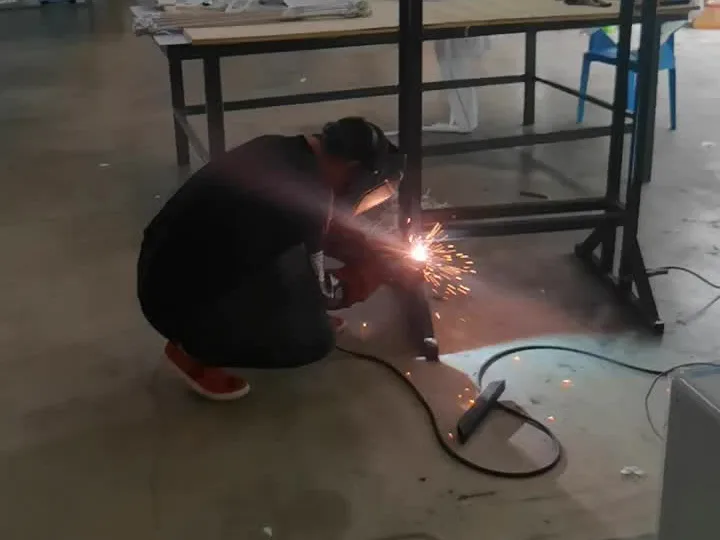
Procurement check: Check frame dimensions, joint locations and intended finish against the approved drawing before graphics or outer surfaces are applied.
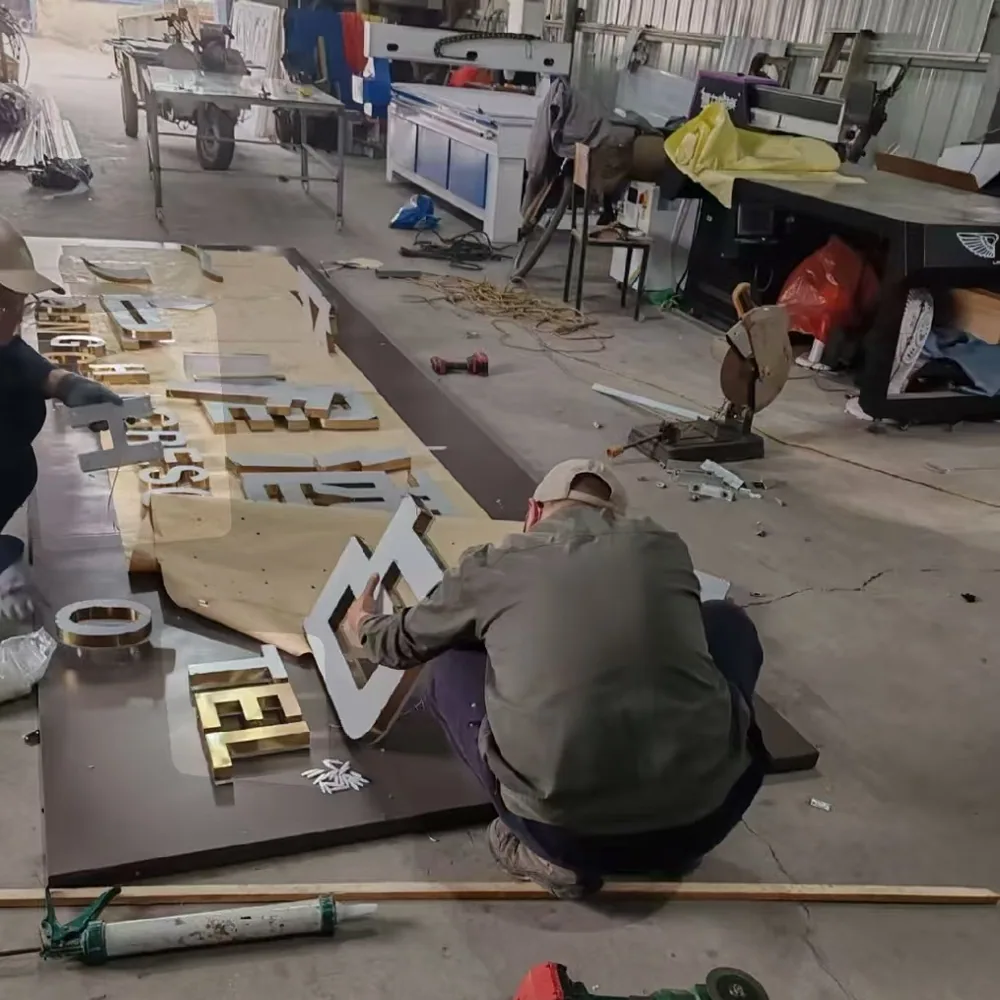
Procurement check: Check letter depth, face finish, edge condition, mounting method and identification of every component before dispatch.
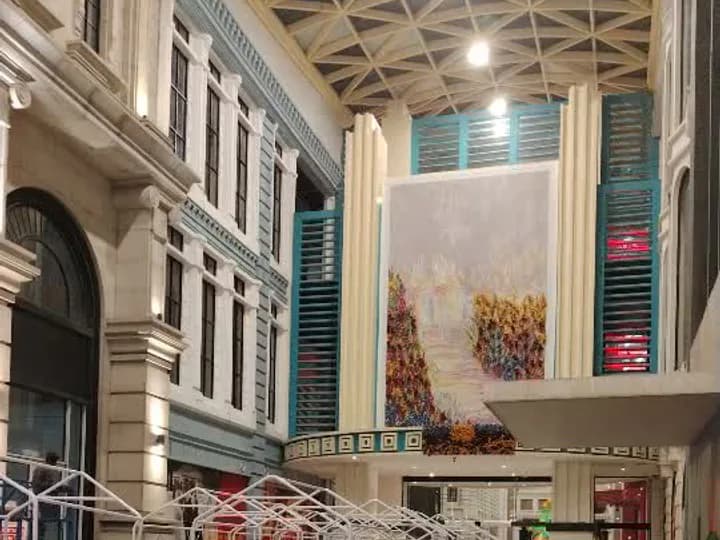
Procurement check: Check access, component sequence, final alignment, public-area protection and responsibility for correcting incomplete work.
The current authorised media library does not contain a photograph that can be verified as project packaging. We therefore do not display another image as packaging evidence. Before dispatch, the buyer should request dated photographs showing protective wrapping, corner protection, component labels, quantity and loading condition.
Executable checklist
Do not release production until every applicable item is checked or explicitly marked not applicable.
Case-linked facts
The references below point to facts documented on existing project pages rather than generic capability claims.
Documents large-format graphic walls, fabricated overhead framing, branded counters, installation-stage assembly and a completed equipment demonstration footprint.
Review cited project evidenceDocuments open-frame fabricated structures, large graphic surfaces, multiple public-facing display zones and completed mall-atrium installation views.
Review cited project evidenceProcurement FAQ
Provide the project type, intended location, required date, quantities, approximate dimensions, available artwork, expected materials or finish, delivery requirements and whether installation or dismantling is needed. Photographs, plans and venue rules reduce avoidable assumptions.
Quotations may include different substrates, thicknesses, finishes, structural assumptions, printing methods, transport, installation labour, access equipment, dismantling or disposal. Compare the defined scope and exclusions rather than the total price alone.
A site review becomes important when reliable measurements, surface condition, power, fixing method, access, working hours, building rules or public-safety constraints cannot be confirmed from supplied information.
Production should begin only from an approved file set with confirmed dimensions, resolution, bleed, fonts, linked assets, colour intent and version ownership. Late artwork changes can affect materials, finishing and installation timing.
Confirm who provides access approval, permits, power, lifting equipment, protection, storage, transport, installation labour, site supervision, dismantling, waste handling and final handover.
Ask for relevant project evidence, workshop or production evidence, a clear scope, material assumptions, installation responsibilities, file-control process and explicit exclusions. Evidence should match the type of work being purchased.
Verify capability
Review relevant case studies and specialist service scopes before sharing the project brief.